
English 


Views: 0 Author: Site Editor Publish Time: 2026-04-24 Origin: Site


Color shapes whether an arched entrance feels calm, dramatic, classic, or quietly luxurious, which is why heat insulated double arched front doors color deserves careful planning. The arch already gives the doorway character, so the right finish should support that shape instead of competing with it. For residential projects, Guangdong Rustic House Fitings Co., Ltd. treats color as part of the full door design, not a last-minute detail. The right tone should work with the façade, reflect the mood of the home, and make the entrance feel intentional from the first glance.
Homes with white render, cream walls, pale stone, or light cladding give the front door plenty of room to stand out. In these settings, darker colors usually work very well because they create a clear focal point without making the façade feel heavy. Black, charcoal, deep green, and dark wood-look tones can all bring definition to a light exterior and make the arch easier to read.
This is one reason darker arched front door colors remain so popular. The curve becomes more visible when the finish has enough depth to separate the door from the wall around it. A black or charcoal entrance feels formal and architectural, while deep green feels softer and more residential. Wood-look tones still create contrast, but they add more warmth and less sharpness.
The key is balance. On a light façade, the door does not need to be loud to be memorable. A rich, confident finish usually works better than something overly bright.
Brick and stone call for a different color strategy because the wall already has texture and visual weight. In these settings, doors often look better in grounded colors rather than finishes that feel too bright or artificial. Brown-black, muted charcoal, deep green, and natural wood effects usually sit comfortably against masonry.
With red brick, warm neutrals and earthy dark tones often feel more natural than icy whites. With gray stone, charcoal, smoked brown, deep green, and darker wood tones can create a more connected look. The goal is not to disappear into the wall, but to create harmony.
This matters even more with arched entrances because the shape already attracts attention. If the color is too aggressive, the whole entry can feel overstated. A more grounded palette often gives better long-term satisfaction.
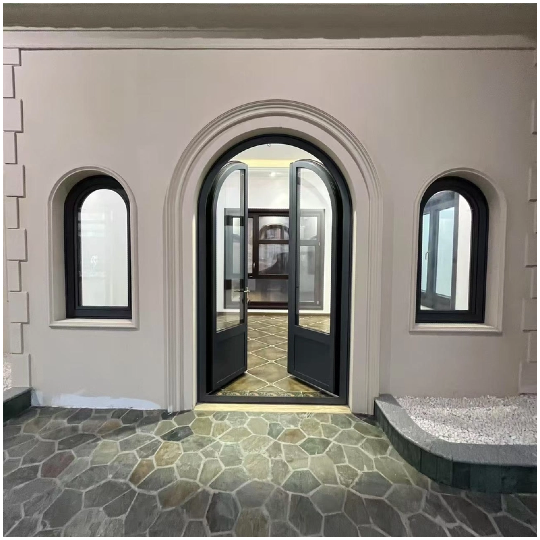
Black and charcoal remain among the safest choices for double arched front doors because they suit many exterior styles and rarely feel temporary. These shades make the doorway look crisp, balanced, and visually anchored. They also help highlight the arch by giving the outline a clean edge.
Black usually feels the most formal and striking. Charcoal creates a softer version of that effect and can be easier to pair with gray stone, roofing, or landscaping. For homeowners who want a finish that feels current without being risky, these shades are often a strong option.
Another advantage is flexibility. Black and charcoal work well with many handle finishes, glass styles, and trim colors. Since the front door is never seen alone, that compatibility makes long-term coordination much easier.
Not every arched entrance needs strong contrast. In some homes, a lighter door is the better solution because the goal is to keep the front elevation airy, calm, and refined. Warm white, light taupe, soft beige, and similar neutrals can work beautifully when the house already has elegant lines and does not need a dramatic focal point.
These colors are especially useful on homes where the entrance should feel polished rather than bold. A warm white double arched door can look graceful without becoming too sharp. Soft neutrals can also make a large entrance feel more approachable.
Warmth is important here. Very cold whites can make a large arched door look flat, while warmer neutrals usually preserve softness and depth. On pale stone or cream façades, they often create a composed and elegant result.
Natural wood tones remain a favorite for homeowners who want warmth without losing a premium look. Teak-like shades, amber browns, oak-inspired finishes, and deeper walnut directions all work well because they soften the form while keeping the entrance substantial.
Wood-look colors suit many types of homes. On modern façades, they reduce hardness and add warmth. On traditional exteriors, they often feel natural and established. They also work well when the entrance needs to connect stone, metal, dark window frames, and lighter wall finishes.
For many homeowners, this is the balance between bold and neutral. The door still has character, but it does not depend on a strong painted statement to achieve it.
Exterior Condition | Recommended Color Direction | Overall Effect |
White or cream façade | Black, charcoal, deep green, wood tones | Clear contrast and strong focal point |
Gray render or cool stone | Charcoal, smoked brown, dark wood, navy | Refined and balanced appearance |
Red or brown brick | Deep green, earthy darks, warm wood tones | Grounded and natural look |
Light stone or mixed masonry | Warm neutrals, bronze darks, oak-like finishes | Elegant and integrated entry |
Modern minimal façade | Black, charcoal, teak, muted navy | Clean and premium statement |
Traditional exterior | Warm white, wood tones, deep green, brown-red | Soft and welcoming presence |
Homeowners who want more identity often move toward deep green or navy because these colors bring personality without losing refinement. Deep green feels calm, mature, and slightly more organic than black. It works especially well with stone, brick, and landscaping, making the entrance memorable without feeling harsh.
Navy creates a different kind of richness. It is cooler and often feels elegant rather than rustic. On white or gray façades, navy can become a confident focal point that feels softer than pure black. It also pairs well with different hardware tones.
These colors are a good choice for homeowners who want something distinctive but still lasting.
Warm reds and brown-red tones have a long history in residential entrances, and they can still look excellent when used carefully. On certain brick homes and traditional façades, these tones can add warmth, familiarity, and a classic sense of welcome.
At the same time, they require more restraint than black, charcoal, or wood tones. If the shade is too bright, it can overpower the arch rather than support it. The best versions are usually deeper and slightly muted. Brown-red, oxblood, and dark terracotta directions often feel more lasting than highly saturated red.
For the right house, this can be a beautiful choice, but it works best when the rest of the exterior can comfortably carry that richness.
Color is only one part of the finish. The sheen level also changes the final effect. Matte often feels quieter and more architectural. Satin offers a balanced look with a little softness and light reflection. Gloss is more noticeable and can feel more formal or decorative.
Because a double arched door already has a strong form, many homeowners find matte or satin easier to live with over time. The same charcoal color can feel calm in matte and much more dramatic in gloss.
A good color can still lose impact if the surrounding details do not support it. Handles, hinges, decorative bars, and glass inserts all influence how the entrance is perceived. Dark doors often look stronger with hardware that adds subtle contrast without too much visual noise. Wood-look finishes may benefit from more substantial hardware that ties in with other exterior accents.
Glass deserves the same attention. Clear, frosted, or decorative glass can all work, but the design should complement the door color rather than fight it. When these details are chosen together, the entry feels complete.
Practical conditions matter as well. Doors facing strong sun may show color differently throughout the day, and darker finishes can feel more visually intense in bright light. Entrances exposed to rain, dust, or frequent use may also benefit from finishes that stay attractive with normal cleaning.
This does not mean homeowners should avoid darker or richer colors. It simply means the finish should match real outdoor conditions. A color that looks perfect on its own may behave differently once installed on a weather-exposed façade.
The best answer to heat insulated double arched front doors color is rarely one isolated shade. The strongest entrances come from combinations: wall material, door finish, hardware tone, glass detail, and the mood the homeowner wants to express. Guangdong Rustic House Fitings Co., Ltd. develops residential entry solutions with custom color flexibility and coordinated design options, helping homeowners turn a general preference into a more complete entrance concept. If you are planning a project and want tailored color guidance for Heat Insulated Water Resistant Double Arched Front Doors, contact us to explore a finish that truly suits your home.
Black, charcoal, and natural wood tones are usually the safest choices because they work with many exterior materials and remain easy to live with over time.
Not necessarily. On many homes, dark colors actually define the arch more clearly and give the entrance stronger presence, especially against light façades.
Yes. Wood-look finishes can soften a modern façade and add warmth while still keeping the entrance premium and visually clean.
Start with the wall material, the level of contrast you want, and the mood of the house. Bold colors suit homeowners who want more identity, while neutrals work better when the goal is calm and timeless refinement.


