
English 


Views: 0 Author: Site Editor Publish Time: 2026-04-17 Origin: Site


A projecting window can transform a room, yet many homeowners stop at the same question: bay vs bow window. Both extend outward, both bring in more light, and both add character to the front of a house, but they do not create the same effect. One looks more defined and angular, while the other feels broader and softer. For readers planning a residential project, Guangdong Rustic House Fitings Co., Ltd. views the bay and bow window as less about trend and more about shape, daylight, room function, and the overall look of the home.
The clearest difference begins with the shape. A bay window is usually made of three sections. The center panel faces forward, while the two side panels angle outward. This creates a sharper geometry that feels structured and architectural.
A bow window usually uses four or more panels to form a gentle curve. Instead of obvious angles, the line moves more smoothly across the wall. That gives it a softer appearance and often makes the window feel wider. Even before considering room layout or ventilation, this panel arrangement already sets a very different tone.
A bay window emphasizes angles and depth. A bow window emphasizes flow and width. That is why two homeowners asking for a projecting window may actually be imagining very different results.
From the outside, a bay window often acts as a defined focal point. It projects forward with a clear outline, which can make the elevation feel stronger and more grounded. On homes with limited wall width or cleaner lines, that firmness can be especially effective.
A bow window changes the façade in a softer way. Rather than creating one compact feature, it spreads visual interest across a wider area. It can soften a large wall and give the front of the house a more elegant rhythm. On homes that need a broader statement, a bow window often feels more graceful.
Because of this, the decision is never only about glass. A bay window usually looks more directional, while a bow window looks more fluid. The better option depends on how you want the front of the house to read from the street.
Both styles increase natural light because they extend beyond the wall and bring exposure from multiple directions. Still, the quality of light feels different. A bay window usually creates a more focused effect. The center panel frames the main view, while the angled side panels add light from the edges.
A bow window spreads light across a wider arc. Because it uses more sections, the daylight feels softer and more continuous across the room. In larger spaces, this can create a calmer, more open atmosphere.
So while both brighten the interior, a bay window often gives a more defined visual direction, while a bow window creates a wider and gentler light pattern.
These window types also shape how the room feels physically. A bay window often creates a clearer recessed area inside. That space can become a reading corner, a seat, or a ledge for books, plants, or decorative items. The extra depth feels practical and easy to use.
A bow window changes the room more subtly. Instead of creating one strong nook, it often makes the entire edge of the room feel broader. This works particularly well in living rooms or larger bedrooms where the goal is less about one defined use and more about creating a more open atmosphere.
In simple terms, a bay window often feels more usable in a focused way, while a bow window often feels more spacious in a softer way.
Ventilation can differ depending on configuration. Bay windows often have opening panels on the sides, which makes airflow simple and effective. This works well in rooms where controlled ventilation is important.
Bow windows can also include operable sections, but because they often use more panels, the opening strategy can vary more. The design may look lighter and wider, but airflow needs to be planned carefully so the window remains practical for daily use.
That means the comparison is not only visual. Homeowners should also consider whether they want a stronger ventilation function or a broader glass feature with lighter airflow needs.
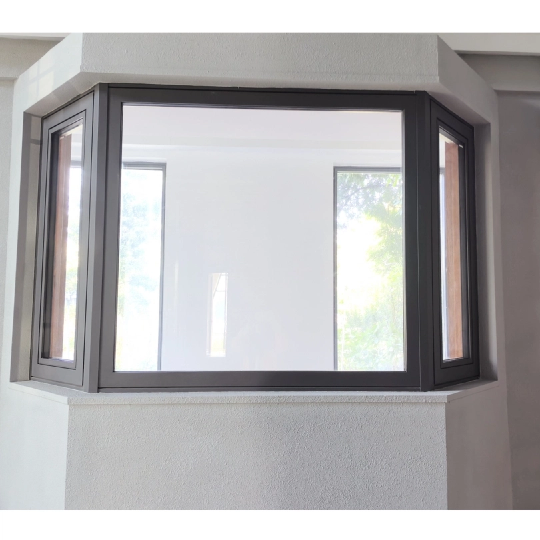
Bay windows often suit smaller rooms and tighter wall spaces better. Because the form is more compact and the lines are more direct, the projection feels noticeable without spreading too far across the façade. This makes bay windows a strong choice for smaller living rooms, bedrooms, or narrower front elevations.
The sharper geometry also helps define the feature clearly. When the goal is to add depth and light without using too much wall width, a bay window often feels more efficient.
Bow windows usually perform best where there is enough wall length to support a wider composition. In a spacious living room, sitting area, or larger front elevation, the curve can look balanced and elegant rather than oversized.
This is where bow windows stand out. They do not simply project outward. They create a broader visual sweep across the room and exterior. In open spaces, that quality can make the whole area feel more relaxed and complete.
Both styles can work with different types of homes, but they support those styles differently. A bay window often works well where the exterior needs stronger definition. It suits homes that benefit from crisp lines and a more structured architectural feature.
A bow window is often chosen when the exterior would benefit from a softer expression. It can feel very natural on homes with classic detailing or wider façades, but with the right finish and proportion it can also look refined in a modern setting.
The key is not to follow style labels too closely. What matters most is how the projection relates to the room behind it and to the size and mood of the façade.
Aspect | Bay Window | Bow Window | Best Fit |
Shape | Stronger angles | Softer curve | Depends on façade style |
Panel layout | Usually three sections | Usually four or more sections | Bay for compact layouts, bow for wider walls |
Light effect | Focused and directional | Broader and softer | Bay for framed views, bow for sweeping light |
Interior feel | More defined ledge or nook | More open and flowing | Bay for function, bow for spaciousness |
Exterior impact | Structured focal point | Elegant visual sweep | Bay for sharper presence, bow for softer statement |
Typical room match | Smaller or medium rooms | Larger rooms and feature walls | Based on wall space and design goal |
Although this article is mainly about comparison, budget still matters. A bow window can cost more because it often uses more panels and requires more fabrication, glass, and installation work. A bay window can also be premium, but its simpler arrangement often makes it easier to plan and build.
The more important issue is long-term fit. A window that suits the wall, the room, and the exterior usually feels like a better investment than one chosen only because it looked attractive elsewhere.
The final decision becomes easier when homeowners ask a few practical questions. How much wall space is available? Do you want a useful nook or a broader visual lift? Should the façade feel sharper or softer? Will the window be a compact feature or a wider statement?
These questions lead to a far better answer than simply asking which style is more popular. Guangdong Rustic House Fitings Co., Ltd. approaches bay and bow window projects as part of a complete residential solution, where design and performance should work together. The right choice should not only look good in a photo. It should feel right in the room and perform well over time.
The simplest answer to bay vs bow window is this: bay often suits homeowners who want stronger angles, efficient use of space, and a clearly framed feature, while bow suits those who want a softer architectural line and a broader visual sweep. Both can improve light, depth, and curb appeal when matched to the right room and façade. Guangdong Rustic House Fitings Co., Ltd. develops custom residential window solutions with performance-focused glazing and flexible configurations. If you are planning a renovation or new build, contact us to discuss a tailored Aluminium Clad Wood Bay and Bow Window solution for your home.
A bay window is often easier to use in a smaller room because its shape is more compact and clearly defined. It can add depth and light without taking over too much wall width.
A bow window can create a broader spread of daylight because it usually uses more panels across a wider arc. A bay window still adds strong light, but the effect is often more focused.
A bay window often feels more structured and can suit modern homes very well. A bow window feels softer and more elegant, though it can also work in modern architecture with the right finish and proportion.
Start with wall space, room function, and the exterior mood you want. If you prefer a sharper feature and a more defined nook, bay may be the better fit. If you want a softer shape and a wider visual effect, bow is often the stronger choice.


