
English 


Views: 0 Author: Site Editor Publish Time: 2025-10-20 Origin: Site


In modern architecture, window systems play a crucial role in both aesthetic appeal and functional performance. Among them, Outswing Casement Windows have gained widespread popularity due to their ability to combine ventilation, energy efficiency, and safety in one elegant design.
Understanding the working principles of these windows is essential for architects, homeowners, and building engineers. Knowledge of how outswing casement windows operate — including their hinge mechanisms, sealing systems, airflow dynamics, and material integration — ensures proper installation, longevity, and maximum performance.
In this article, we explore the core principles behind outswing casement windows, detailing how each component contributes to weatherproofing, security, energy efficiency, and user comfort. This comprehensive guide will help you appreciate why these windows are not just functional openings but engineered systems that enhance building performance.
At the heart of an outswing casement window is the side-hinged sash. Unlike inswing windows, which open inward, outswing windows pivot outward from one side of the frame. This design provides several key benefits:
Unobstructed ventilation: The outward motion allows the entire window area to act as a vent, maximizing airflow.
Enhanced view: No interior space is blocked, creating a more open and airy interior.
Space efficiency: Interior furnishings and floor space remain free from interference.
The placement and type of hinge directly affect the maximum opening angle and structural stability of the window. Heavy-duty friction hinges or stainless-steel side hinges are typically used to support large panels and ensure smooth, stable operation.
The operation of an outswing casement window involves careful mechanical leverage:
Friction hinges allow the sash to stay open at multiple positions without slamming shut, offering controlled airflow.
Counterbalancing mechanisms, sometimes incorporated in larger windows, reduce the effort needed to push or close the sash, enhancing usability for all ages.
Smooth operation ensures that even large panels open effortlessly, while resisting wind pressure when closed.
This precise design ensures both functionality and durability, allowing the window to withstand repeated daily use without compromising performance.
One of the most critical features of outswing casement windows is their weatherproofing system. When the sash closes, it presses tightly against the frame, creating a compression seal that blocks air, rain, and dust.
This seal is particularly effective in high-wind or rainy climates, preventing water infiltration and maintaining indoor comfort.
The outward swing naturally reinforces the seal under wind pressure — the stronger the wind, the tighter the sash is pressed against the frame.
Compression seals are usually made of EPDM rubber or silicone, offering long-term elasticity and resistance to UV degradation. Combined with precise engineering tolerances, they ensure minimal leakage over decades of use.
Outswing casement windows often feature multi-point locking systems, securing the sash at several points along the frame.
Enhances air tightness, reducing drafts and energy loss.
Provides added security, making it more difficult for intruders to force open the window.
Maintains consistent pressure along the compression seals, improving weatherproof performance.
By integrating these mechanical and sealing features, outswing casement windows deliver a superior combination of comfort, security, and resilience against environmental forces.
One of the defining advantages of outswing casement windows is their airflow efficiency. When fully opened, the sash directs incoming air into the interior, promoting natural ventilation without creating turbulence or drafts.
Unlike inswing or sliding windows, which can block air pathways or limit opening width, outswing designs allow maximum ventilation area. This feature is particularly valuable in warm or humid climates, where maintaining indoor air quality is essential for comfort and health.
Modern outswing windows incorporate friction stays or restrictor arms that allow the sash to remain open at multiple angles:
Provides precise control over the amount of airflow.
Balances ventilation with safety, preventing the window from opening too widely in high winds.
Enhances energy efficiency, as controlled openings can reduce cooling loads and promote passive airflow.
These airflow principles make outswing casement windows an excellent choice for both residential and commercial buildings seeking comfort without compromising security.
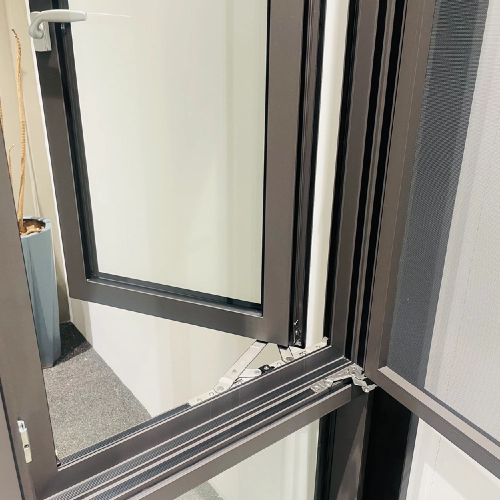
The performance of outswing casement windows depends heavily on frame materials:
Aluminum: Lightweight, corrosion-resistant, suitable for large panels.
uPVC: Cost-effective, low maintenance, and thermally insulating.
Treated timber: Offers natural aesthetics and thermal performance.
Proper material selection ensures structural rigidity, enabling the sash to resist wind loads, operate smoothly, and maintain longevity.
The load distribution along the hinges and frame is critical. Well-engineered frames prevent sagging, warping, and stress concentration, which could compromise weatherproofing and safety over time.
The window sash often incorporates double or triple glazing, which enhances:
Thermal insulation: Reduces heat transfer, improving energy efficiency.
Acoustic insulation: Minimizes noise infiltration, ideal for urban or coastal environments.
Security: Laminated or toughened glass adds protection against break-ins.
Proper integration of glazing with the sash and frame is essential for maintaining airtightness and optimal energy performance.
Safety is a paramount concern when it comes to outswing casement windows, especially in high-rise buildings, apartments, or homes with children. These windows are engineered with restrictor arms and friction stays that control the opening range of the sash. By limiting the maximum opening angle, they prevent accidental falls or overextension while still allowing adequate ventilation. The friction stays also ensure that the sash remains stable during sudden gusts of wind, reducing the risk of damage or injury. This combination of features makes outswing casement windows an ideal choice for families and multi-story residences, providing a secure yet functional window solution that balances airflow with safety.
Maintenance is another area where outswing casement windows excel. Many models feature a tilt-out or fully rotatable sash, enabling easy cleaning from inside the building without the need for ladders or external access, which is particularly advantageous for high-rise apartments or commercial buildings. High-quality hinges, friction stays, and compression seals are designed to minimize wear and tear, ensuring smooth operation for years. Routine maintenance is minimal, often requiring only periodic lubrication and seal checks, which preserves both functionality and aesthetic appeal. These safety and maintenance principles collectively make outswing casement windows a reliable, user-friendly, and long-lasting choice for residential, commercial, and urban applications.
Outswing casement windows contribute significantly to energy efficiency:
Compression seals and multi-point locking systems prevent air leakage, minimizing heat loss in winter and heat gain in summer.
Reduced thermal bridging enhances HVAC efficiency, lowering energy consumption and utility costs.
A properly installed outswing casement window becomes an effective barrier against unwanted heat or cold, improving indoor comfort while supporting sustainable building goals.
Beyond airtightness, these windows facilitate passive ventilation:
Outward swing channels air strategically into the building interior.
Adjustable openings allow natural airflow without creating drafts.
When combined with shading devices, low-E glass, or cross-ventilation designs, outswing windows reduce reliance on mechanical cooling, contributing to green building certifications such as LEED or BREEAM.
The performance and versatility of Outswing Casement Windows are the result of carefully engineered components, each contributing to overall functionality, safety, and comfort. The following table highlights the key elements and their impact:
Component / Principle | Function | Impact on Performance |
Side Hinges | Allows outward swing | Provides full ventilation and an unobstructed view, maximizing airflow and interior openness. |
Friction Hinges | Supports smooth operation | Ensures stability of the sash at various opening angles and enables adjustable airflow for personalized ventilation. |
Compression Seals | Weatherproofing | Creates a tight barrier against air and water infiltration, enhancing comfort and energy efficiency. |
Multi-Point Locks | Security & airtightness | Strengthens window security while maintaining airtight construction, reducing energy loss and improving safety. |
Frame Material | Load distribution | Determines structural durability, supports sash weight, and provides resistance to wind pressure and deformation. |
Glazing | Thermal & acoustic | Offers insulation against heat and cold, reduces noise, and contributes to overall energy savings. |
Restrictor Arms | Safety | Controls the opening range, making the window child-safe and preventing accidental overextension. |
This table demonstrates how the combination of mechanical design, materials, and engineering principles ensures that outswing casement windows are not only aesthetically appealing but also highly functional. Each component works in harmony to provide maximum ventilation, enhanced safety, durability, energy efficiency, and user-friendly operation, making these windows a preferred choice for modern residential and commercial buildings. Their design reflects a careful balance between form, function, and long-term performance, illustrating why outswing casement windows are a smart investment in contemporary architecture.
The working principles of Outswing Casement Windows showcase a seamless blend of innovative design, high-quality materials, and precise engineering. From the side-hinged sash to multi-point locking systems, compression seals, and advanced glazing, every component is carefully designed to enhance ventilation, energy efficiency, safety, and indoor comfort. These windows are highly versatile, performing exceptionally in residential homes, high-rise apartments, coastal resorts, and heritage restoration projects. Their outward-opening mechanism not only maximizes airflow but also optimizes interior space and improves security, making them a practical and stylish choice for modern architecture.
For homeowners, architects, and building professionals looking to integrate high-performance Outswing Casement Windows into their projects, Guangdong Rustic House Fittings Co., Ltd. offers expert solutions and customized designs. With years of experience in producing durable and aesthetically appealing window systems, they can provide guidance, specifications, and tailored options to meet any architectural requirement. To explore their range of products or discuss your project needs, visiting the company or contacting their professional team can help you make informed decisions and ensure optimal results.


